Fairness between cohorts is the whole game
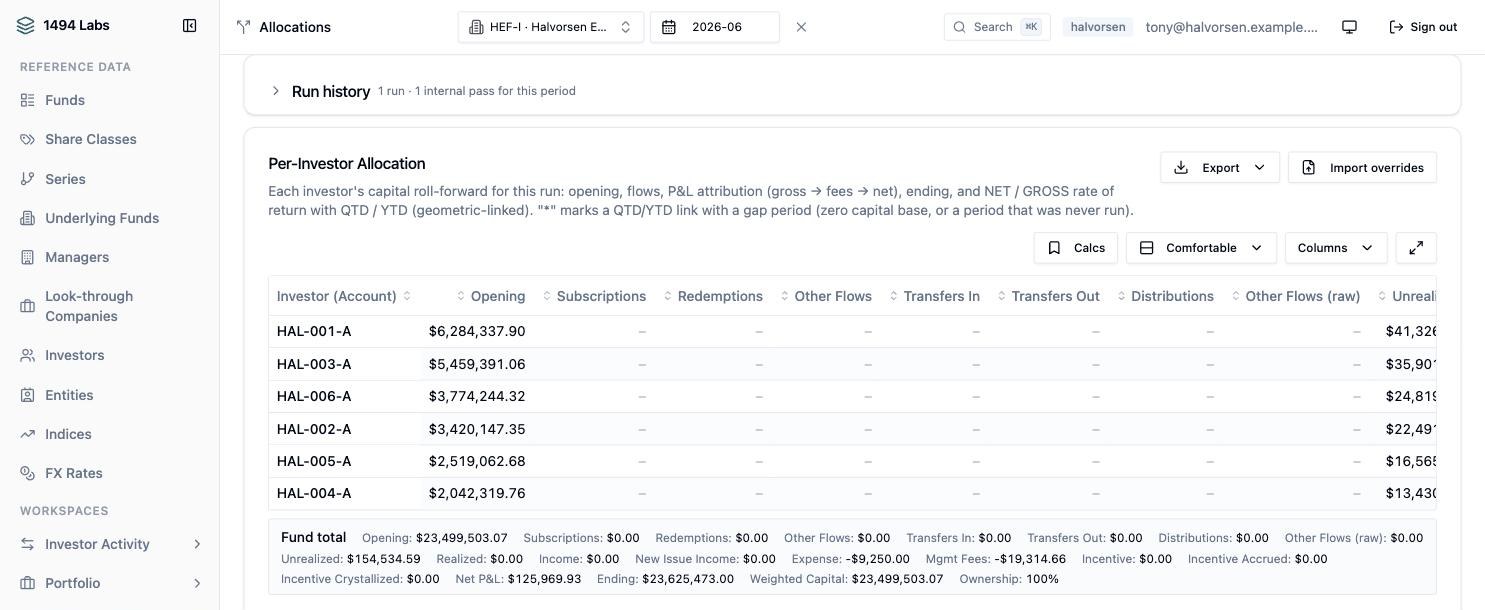
Two investors in the same strategy, one who subscribed in January and one in July, should not pay the same incentive fee on the same year. Every mechanism an open-end fund uses, series accounting, equalization, the equalization credit and depreciation deposit, exists to fix that one unfairness, and each of them is fiddly enough that it is usually implemented in a spreadsheet.
- ✓Subscriptions, redemptions, transfers and investor-level activity on the ledger
- ✓Series accounting with per-series high-water marks and consolidation
- ✓Equalization, including the credit and depreciation deposit method
- ✓Incentive fees or incentive allocations, crystallized or accrued
- ✓Side pockets that ring-fence frozen participation and split dealing NAV from total NAV
- ✓Sleeves as a first-class ledger dimension, not a reporting tag
High-water marks that survive the year
A high-water mark is easy to compute and easy to lose. It has to survive a partial redemption, which reduces the balance it applies to without resetting it. It has to survive a transfer between investors. It has to survive a restatement of a prior period, when the performance it was measured against changes underneath it. Get any of those wrong and an investor either pays twice for the same gain or never pays for it at all.
That is one of the fifty-seven invariants checked daily against live funds: every high-water mark survives redemption, transfer and restatement. Not a unit test over a fixture, an arithmetic check against real money.
A fund of funds is a book, not a list
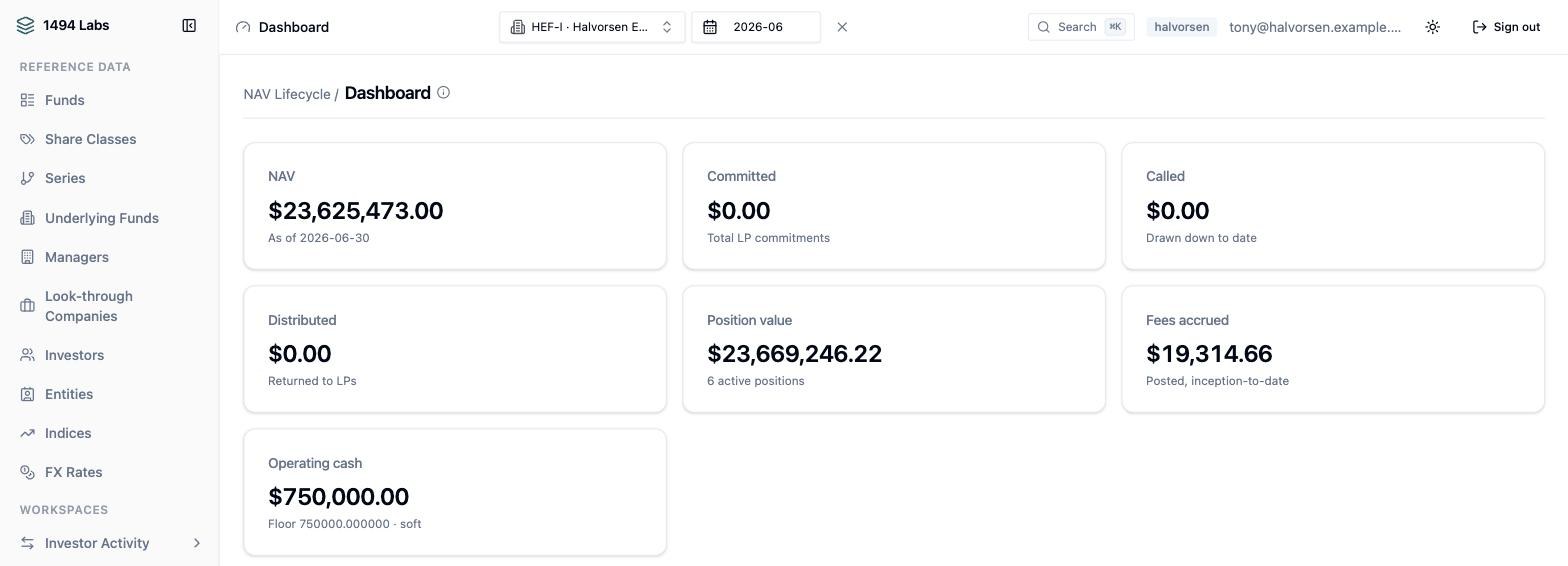
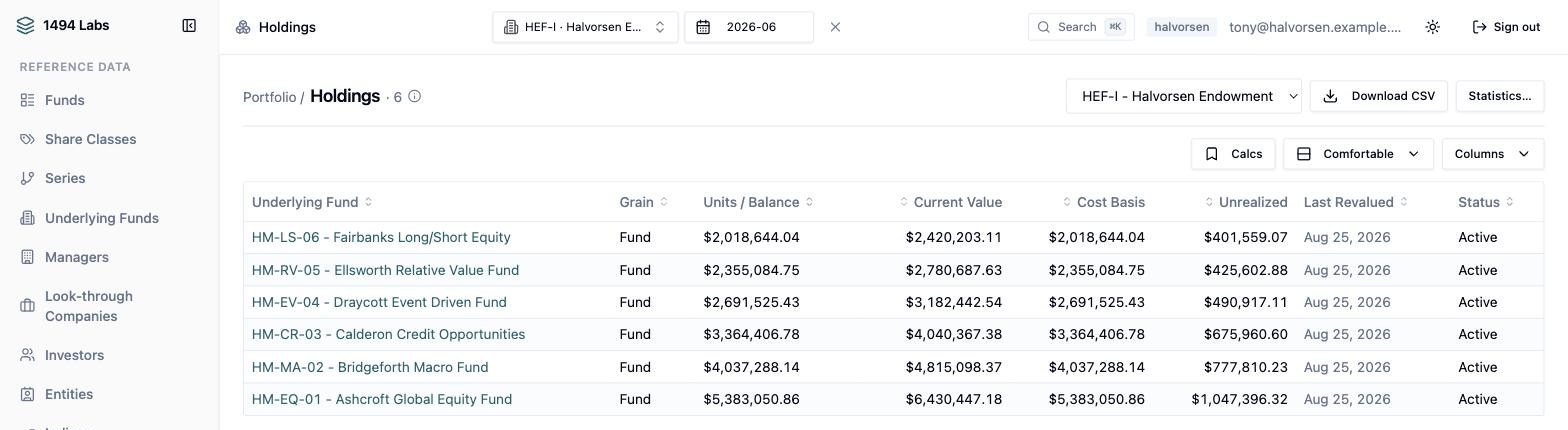
Underlying fund positions carry a cost basis, an unrealized gain and a valuation date per manager. When a manager sends an estimate and later a final, the true-up is a correction with its own record rather than an overwrite, and it is seal-safe: a closed period can be corrected without breaking what was already reported.
The cash underneath
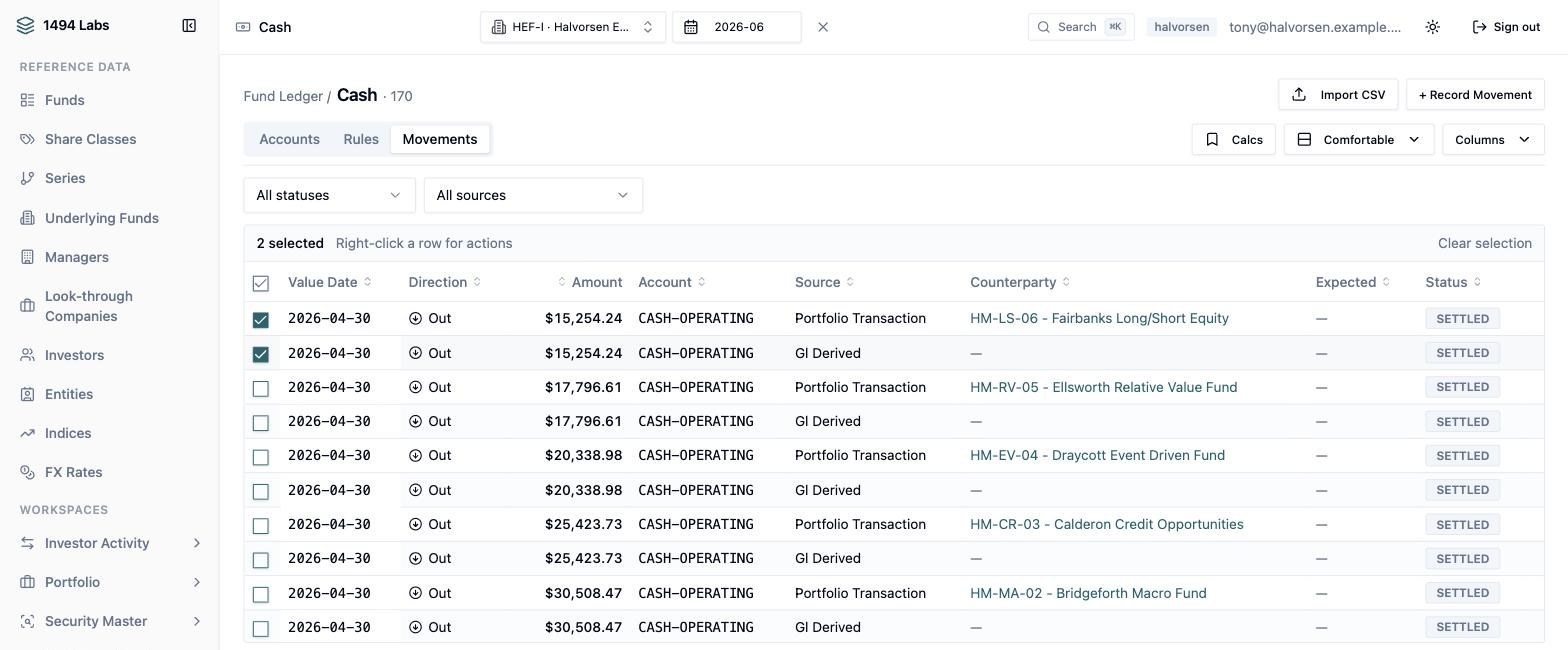
Subscriptions arrive as receivables and become cash when they clear. Redemptions leave as payables. Treating them as cash the moment they are recorded is how a fund's operating cash goes quietly negative on paper while the bank account is fine, and it is a surprisingly common defect.
Related reading
- The platform overview
- ABOR and IBOR, and why most systems keep them apart
- For administrators running several hedge fund clients
Currently in private development
Built for the people who have to sign the books rather than only read them. If this is your problem, we would like to hear how you have it.