Forty funds, forty agreements
The administrator's difficulty is variety. One client's management fee is charged on committed capital during the investment period and on invested capital after it. Another's is on net asset value with a most-favoured-nation clause. A third caps organizational expenses and makes the manager bear the excess. A platform with a house convention makes all of them somebody's manual adjustment.
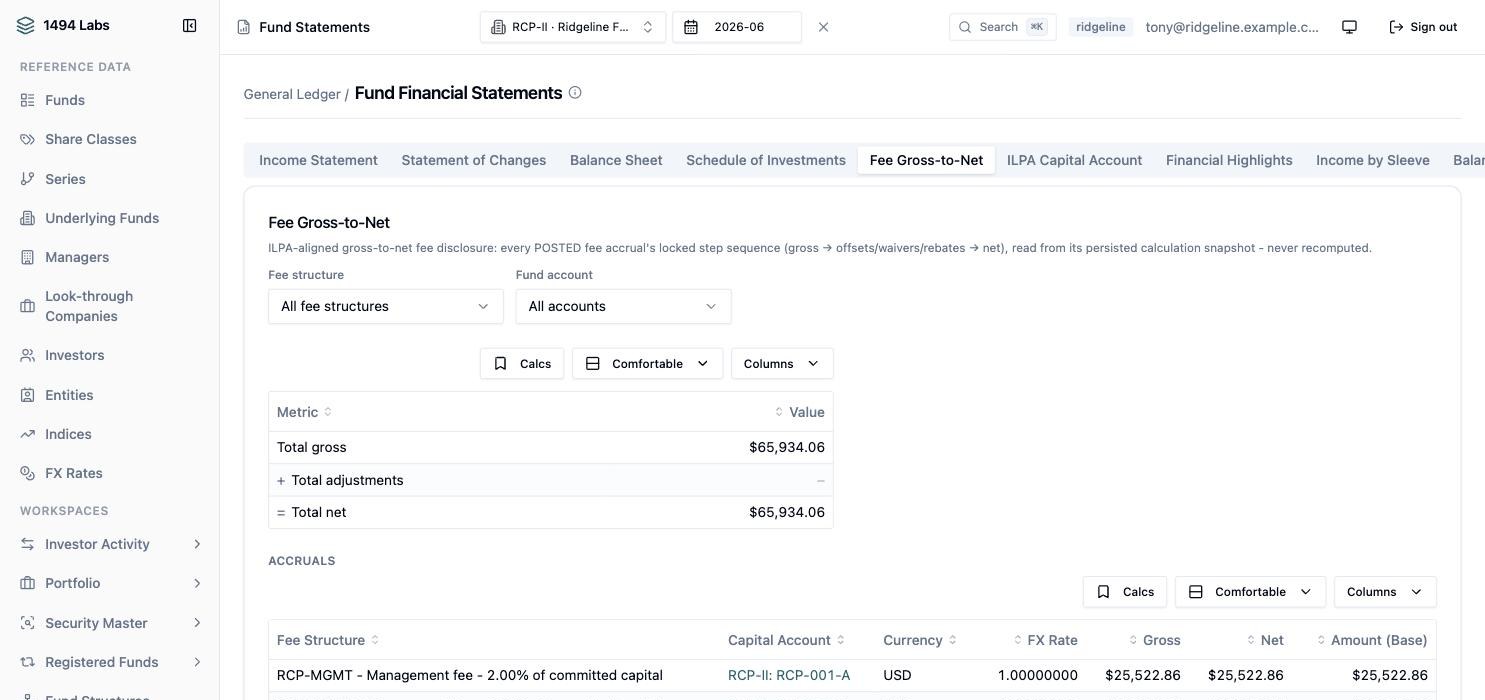
Fee structures here are composable rather than parameterized: tiered schedules, modifiers, offsets, expense caps and four-way settlement, configured per fund. Terms can be read out of the limited partnership agreement into a prefilled builder, with the clause attached, and a human confirms every one before it becomes a fund term.
- ✓Schema-per-tenant isolation, not a filter on a shared table
- ✓Per-fund fiscal calendars, and a close that seals without freezing the current view
- ✓Two-axis review and close, with a checklist and a controller's dashboard
- ✓Reconciliation breaks with a worklist, not a report nobody reads
- ✓Bulk CSV loaders for the systems that will never have an API
- ✓More than 800 endpoints under one OpenAPI spec
A close that actually closes
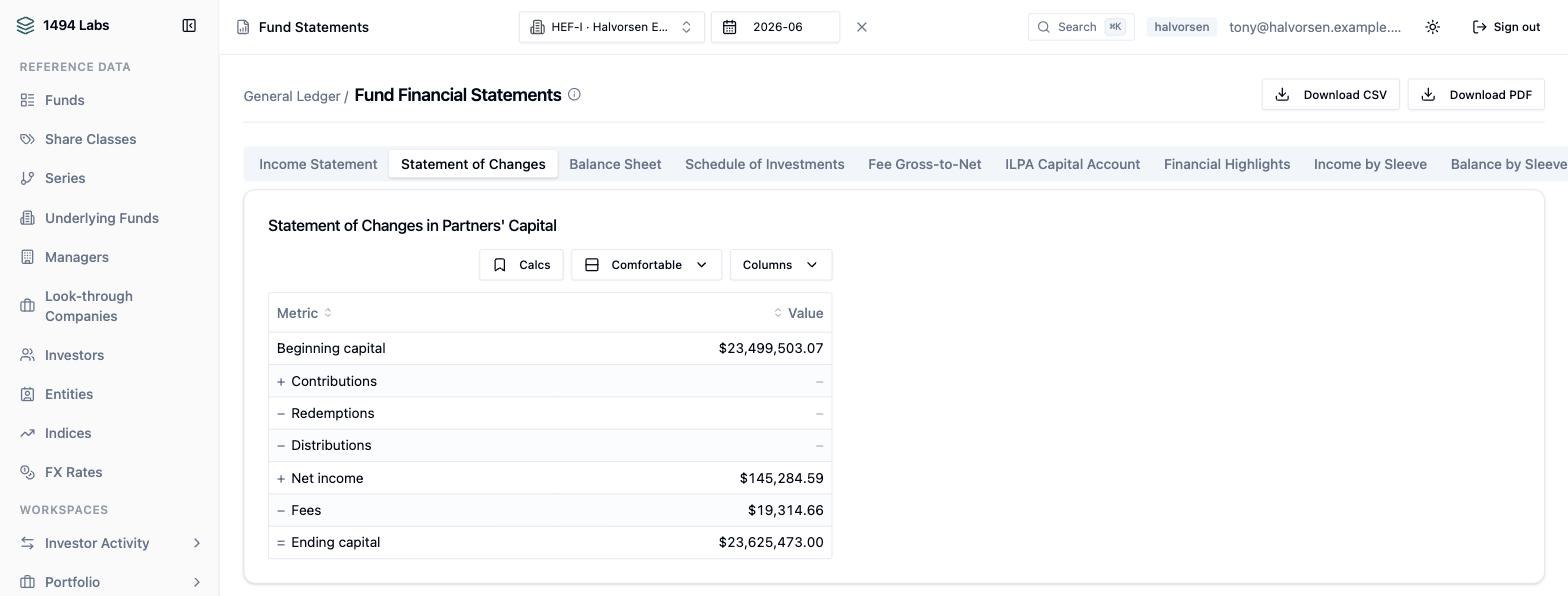
Period close is a state machine, per fund and per period: open, soft closed, hard closed. A hard-closed period freezes writes and its trial balance is captured as an artifact, so a statement produced a year later still ties to what was reported at the time. Guards are not advisory: a fund with negative capital or a pending crystallization is reported and skipped rather than forced through.
Corrections stay possible without pretending they did not happen. Anything in an open period is editable; a sealed period takes a graded, audited revision. The distinction matters because the alternative, in practice, is an administrator keeping a private list of what the system says versus what is true.
Breaks with somewhere to go
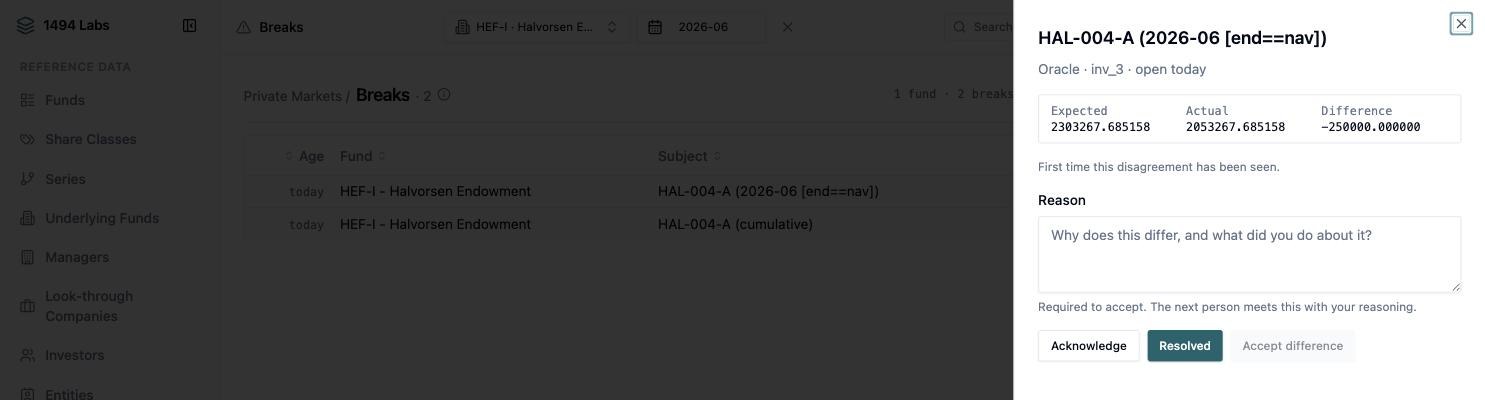
A reconciliation report that nobody works is a compliance artifact, not a control. Breaks here are records with a lifecycle: detected, assigned, explained, resolved, with the detectors that found them stated and an aged worklist rather than a monthly PDF.
Every screen runs on the public API
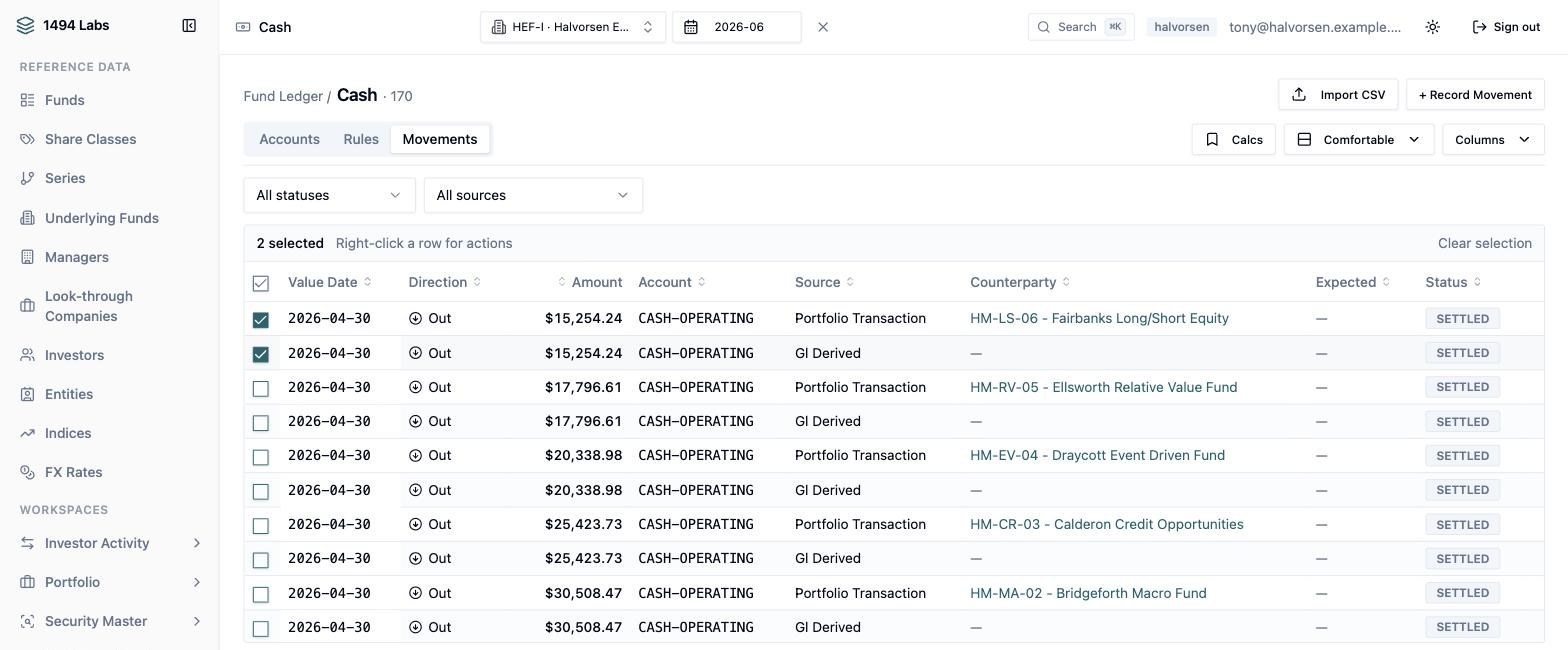
There is no private back channel. The product's own interface is built on exactly the API a client gets, which is the only real guarantee that the API is complete. Custodians, banks, portals, data vendors and a client's own warehouse all integrate against the same surface, and the systems that will never have an API get bulk CSV loaders instead.
Related reading
Currently in private development
Built for the people who have to sign the books rather than only read them. If this is your problem, we would like to hear how you have it.