Commitments are ledger events, not a side table
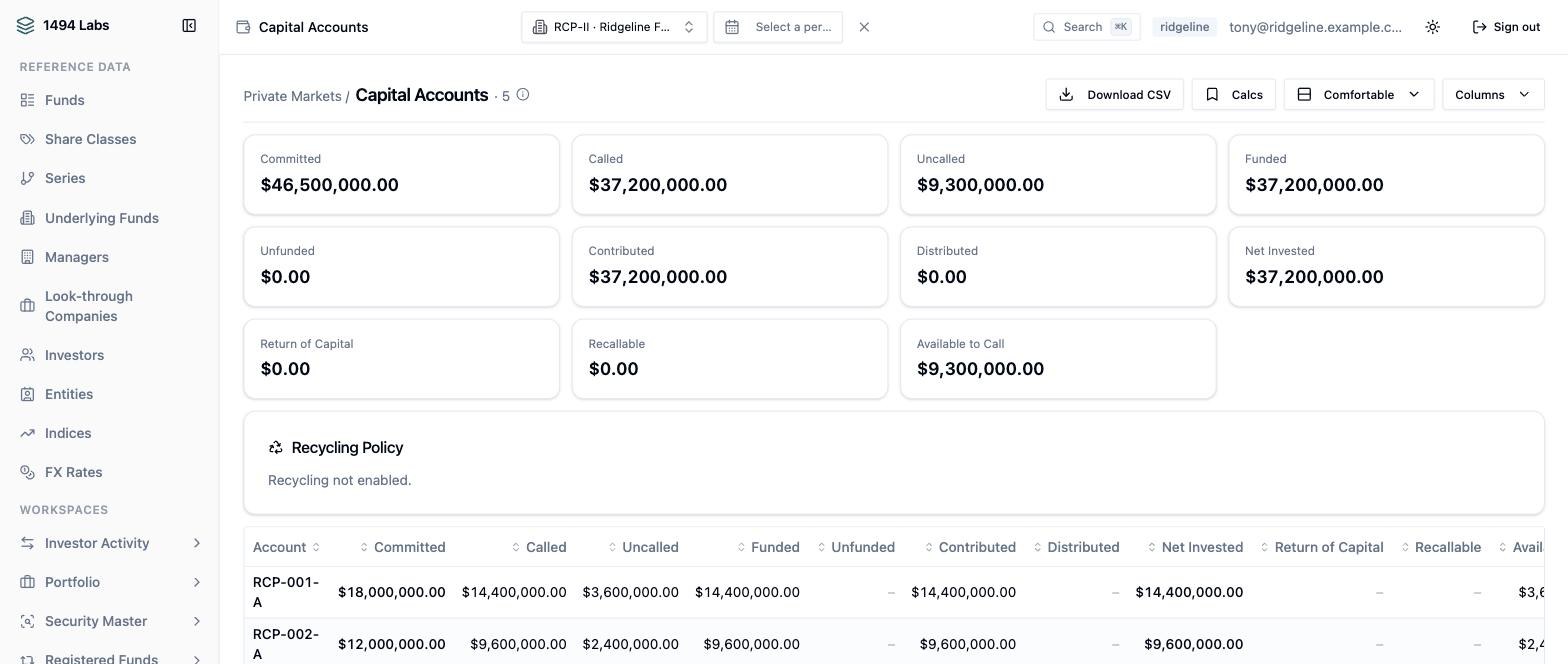
In most closed-end books the capital account lives in a spreadsheet alongside the accounting system, because the accounting system was built for open-end funds and does not know what uncalled capital is. That spreadsheet is then the source of truth for the number limited partners care about most.
Here, a commitment, a call, a drawdown and a distribution are events on the ledger with their own state. The capital account is derived from them. Uncalled is what is left after the calls that happened, not what somebody remembered to decrement.
- ✓Commitments, subsequent closes and equalization on late closers
- ✓Capital calls with purpose, notice and funding state
- ✓Recallable distributions and recycling policy, per fund
- ✓European and American waterfalls as configurable tiers
- ✓GP carry, per-principal vesting, clawback and LP givebacks
- ✓ILPA CC&D component codes on calls and distributions
Waterfalls as tiers, not as two presets
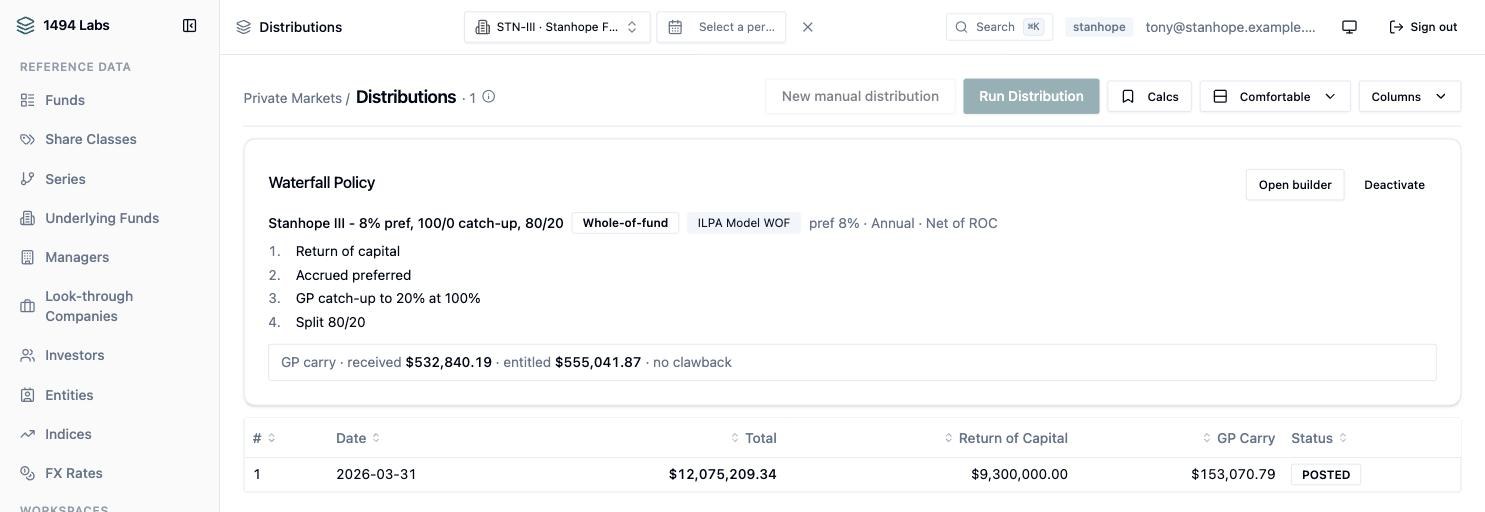
Almost every platform offers "European" and "American" as a dropdown. Almost no limited partnership agreement is either textbook case. Real agreements have a preferred return with a compounding convention, a catch-up at some rate to some target, a split that changes at a hurdle, and a whole-fund test that may or may not apply to the catch-up.
So a waterfall here is an ordered set of tiers with their own parameters, and the two named conventions are just two configurations of it. Carry is held as an accrual subject to its test rather than as settled fact, which is what makes clawback a calculation rather than a crisis. We worked the same fund through both conventions, with the numbers, in European vs American waterfalls.
Calls that move the account
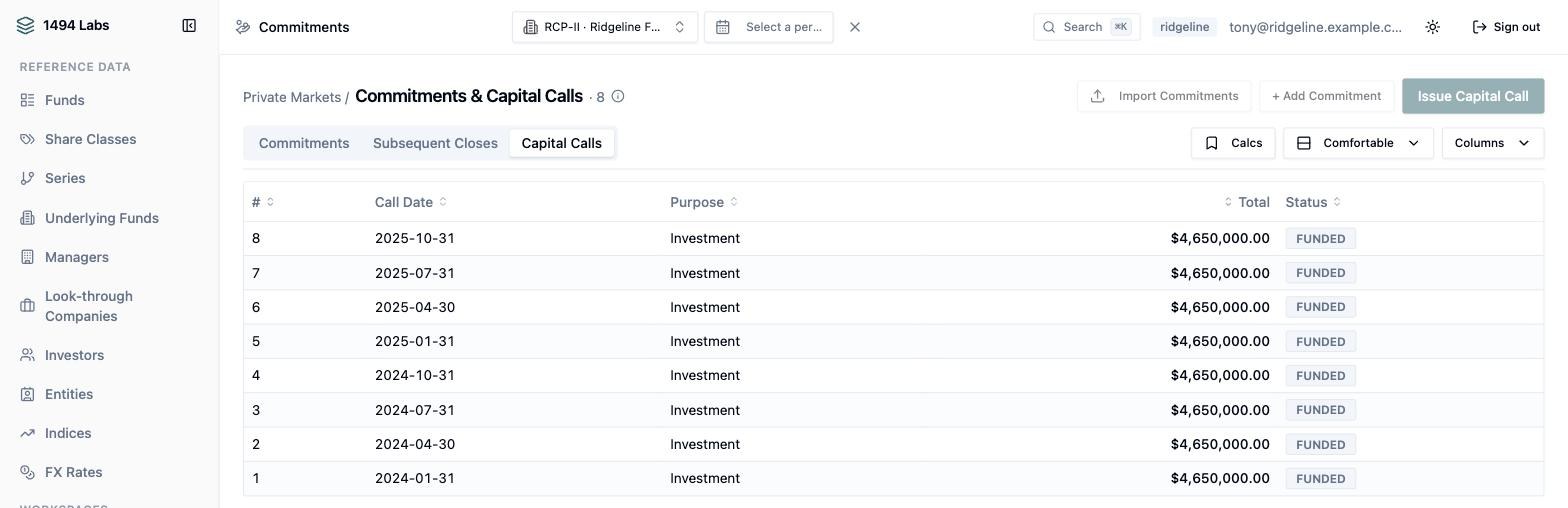
A capital call is issued against commitments, noticed to the limited partners it draws on, and funded. Each of those is a state the call actually has, and the capital account moves because of the funding rather than alongside it.
The fund knows what kind of fund it is
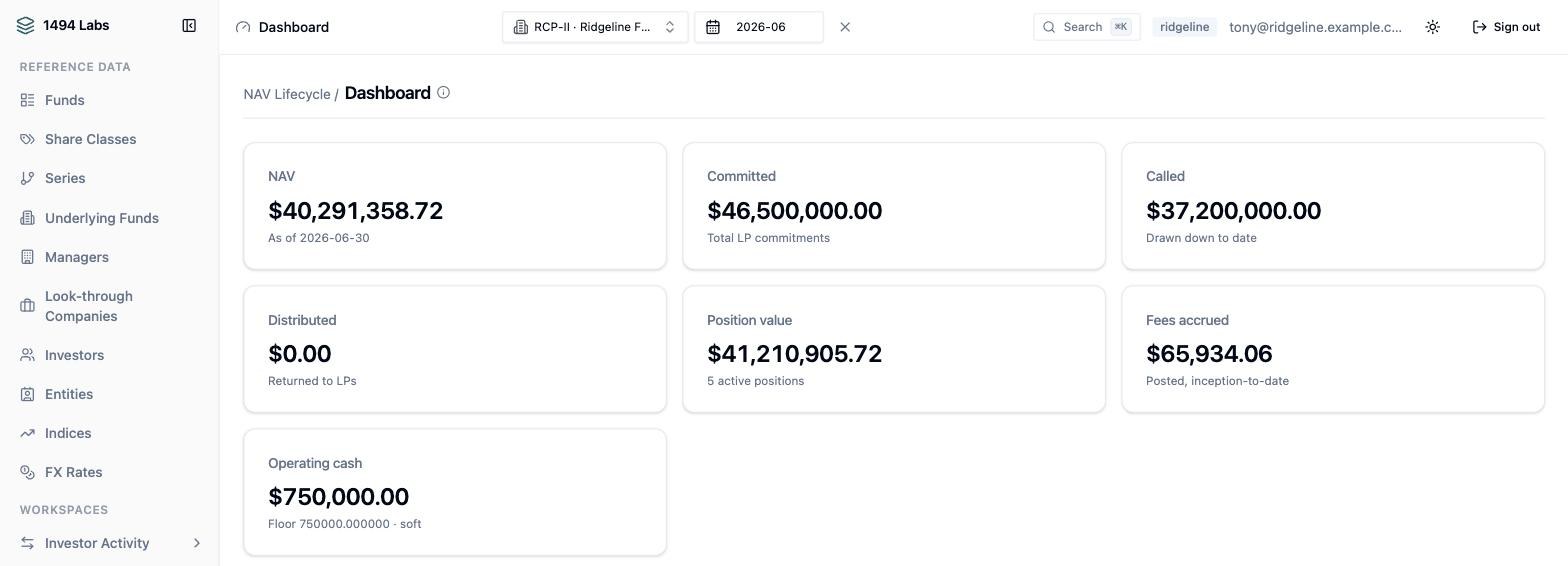
Funding model is a property of the vehicle. A drawdown fund's dashboard leads with committed, called and distributed; an open-end fund's leads with subscriptions and redemptions. Neither is a setting somebody has to remember, and a platform that runs both does not need two products to do it.
ILPA, as the template rather than as a claim
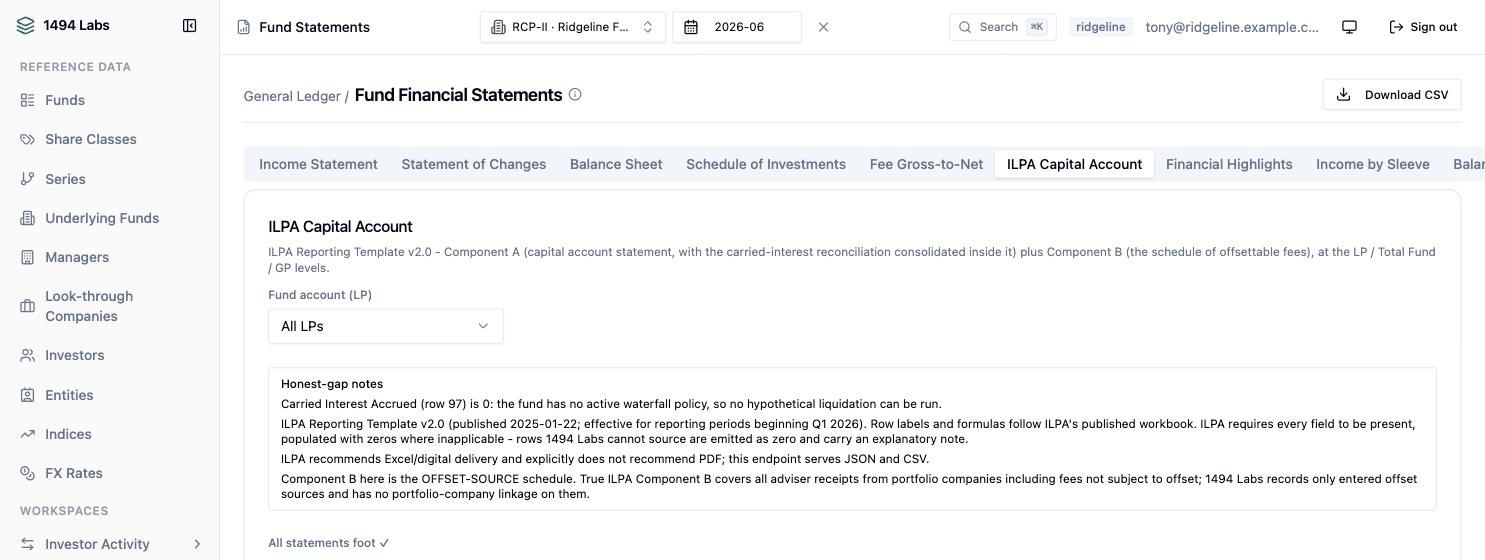
The ILPA Reporting Template v2.0 is a workbook with fixed rows, and it requires every field to be present. That is where most implementations get quietly dishonest: a row the book cannot source is emitted as zero, and a zero is indistinguishable from a real nil.
Related reading
- European vs American waterfalls, with the numbers worked
- The platform overview
- For administrators running several closed-end clients
Currently in private development
Built for the people who have to sign the books rather than only read them. If this is your problem, we would like to hear how you have it.